

Here's something that surprises most cat owners: grown-up cats rarely meow at each other. Kittens meow at their mum, but adult cats keep the meow mostly for us.
Psychology professor Jay Schwartz, from Western Oregon University, has a lovely theory. Cats meow to their mother, and at home we became the mother. Their meows also sound a bit like a human baby, so we answered. Over generations, cats got better at talking to us. He says domestic meows are “cuter and less harsh” than the ones wild cats make.
Your own private language
Can strangers tell what a cat wants from its meow? In older experiments, people who didn't know the cats did no better than guessing. But when owners listened to their own cat, they often got it right: happy, hungry, fed up. Biologist Jonathan Losos calls it a kind of “private language” between a cat and its human.
There's even a clue in the tune. Researchers in Sweden found a meow that goes down at the end tends to mean stress, while one that goes up sounds more content. And most of us meow back. A European study found cat owners often reply to their cats. Admit it, you do it too.
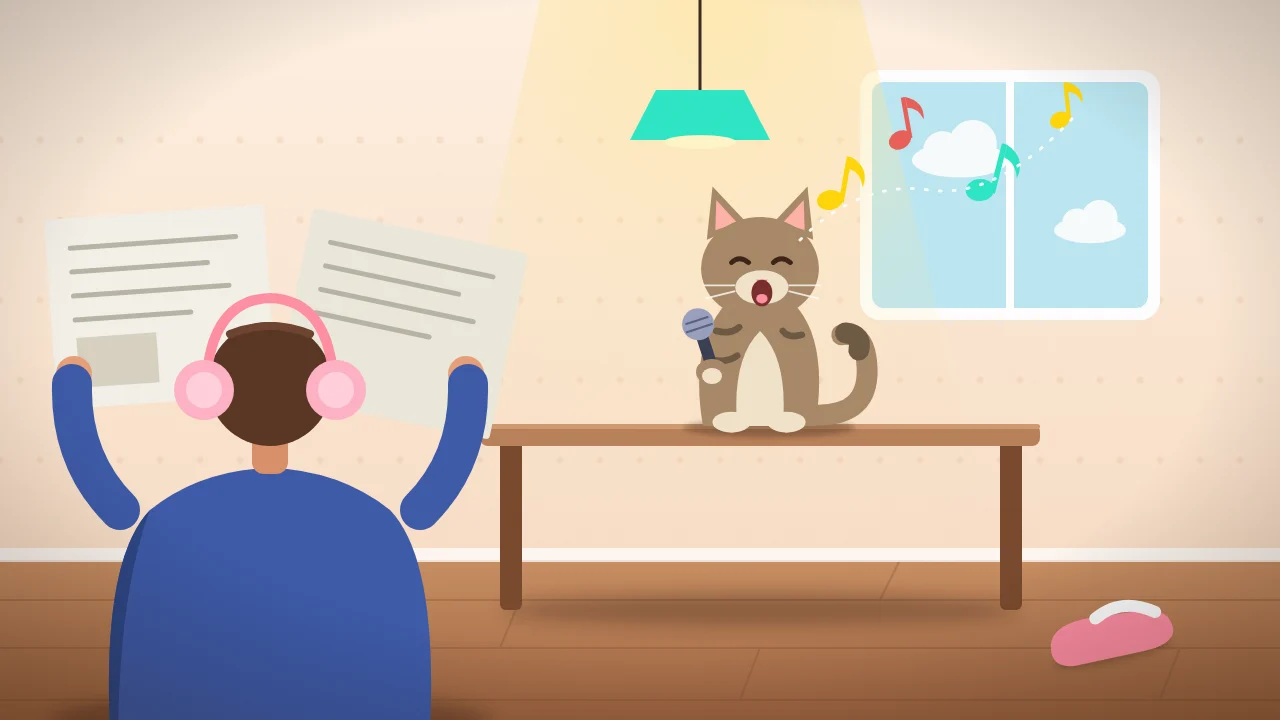
Why the cat meows at Dad
A study from Turkey filmed 31 cats greeting their owners at home. Cats meowed about 4.3 times in 100 seconds for men, and only 1.8 times for women. The researchers think men may simply talk less to their cats, so the cat has to speak up. They warn it's a small study from one country.
Are they manipulating us?
Schwartz says no, not on purpose. Cats just learn that meowing works. Which, to be fair, is exactly what toddlers learn too.
So next time your cat meows, listen to the tune. Then answer. You're the only one who speaks the language.