

For about a hundred years, cars have been made the same way. A bare shell rolls down a long line and at every stop someone bolts on one more thing. Tesla decided to skip the queue.
Its Cybercab, a small gold two-seater with no steering wheel and no pedals, is the first car built with what Tesla calls the “unboxed” method.
Built in chunks
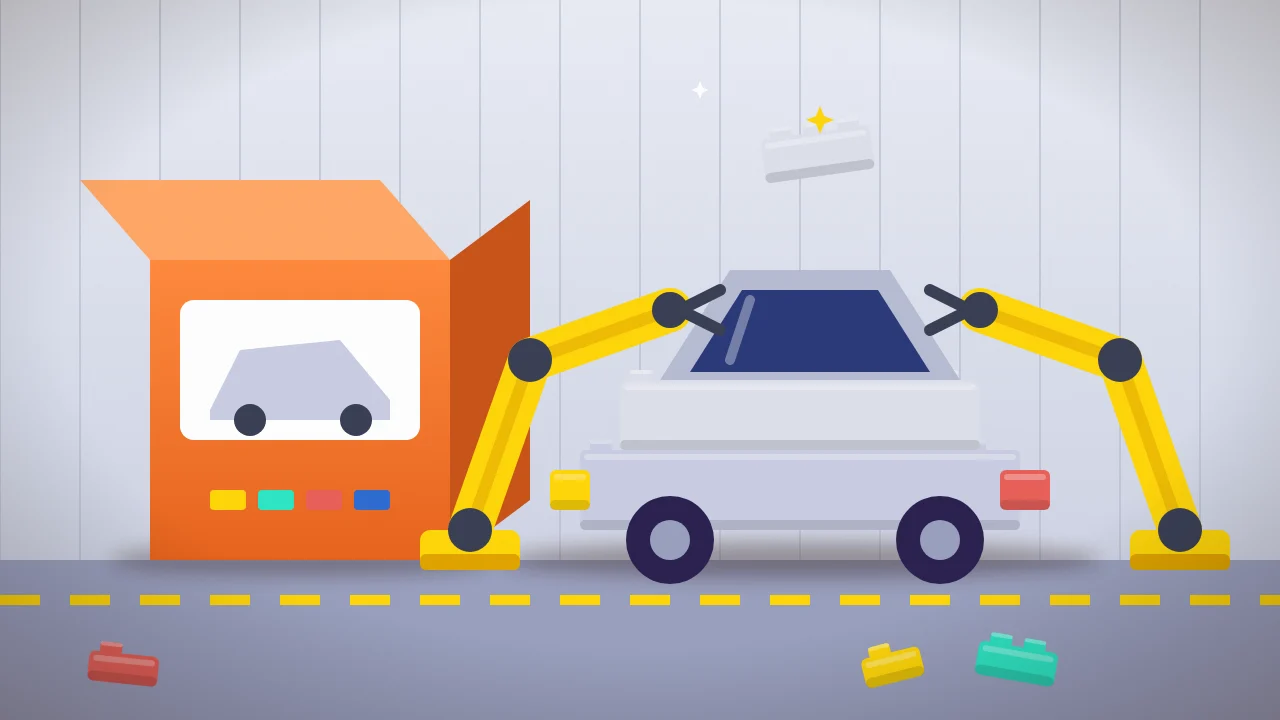
The front, the back, the battery and the inside are all built at the same time, in different spots. At the end, the big pieces are joined together, a bit like snapping Lego. Tesla says this makes the line half as long, and Elon Musk claims it's more than five times faster. Those are Tesla's own numbers, mind you. Nobody independent has checked them yet.
The car also has about half the parts of a Model 3. The gold colour isn't painted on, it's built into the panels. And there's no charging port: it's meant to charge without a cable.
From one to hundreds
The first Cybercab rolled out of Tesla's factory near Austin, Texas, in February 2026. Real production started in April, and by 10 October, 319 of them were registered in Texas. Musk himself warned the start would be “painfully slow”.
The juicy bit
Musk says it will cost under $30,000. When it was unveiled in 2024, tech YouTuber Marques Brownlee didn't buy it, and promised to shave his head on camera if Tesla hit that price and its delivery date by the end of 2026. Musk's reply: “Gonna happen.” Two months to go. Somewhere, a barber is waiting by the phone.
The catch
Building the car is the easy half. It also has to drive itself, legally, and a car with no wheel needs the regulators' blessing. Tesla also missed its own goal of 500 robotaxis in Austin by the end of 2025. But if the Lego trick works, expect other carmakers to start copying.