

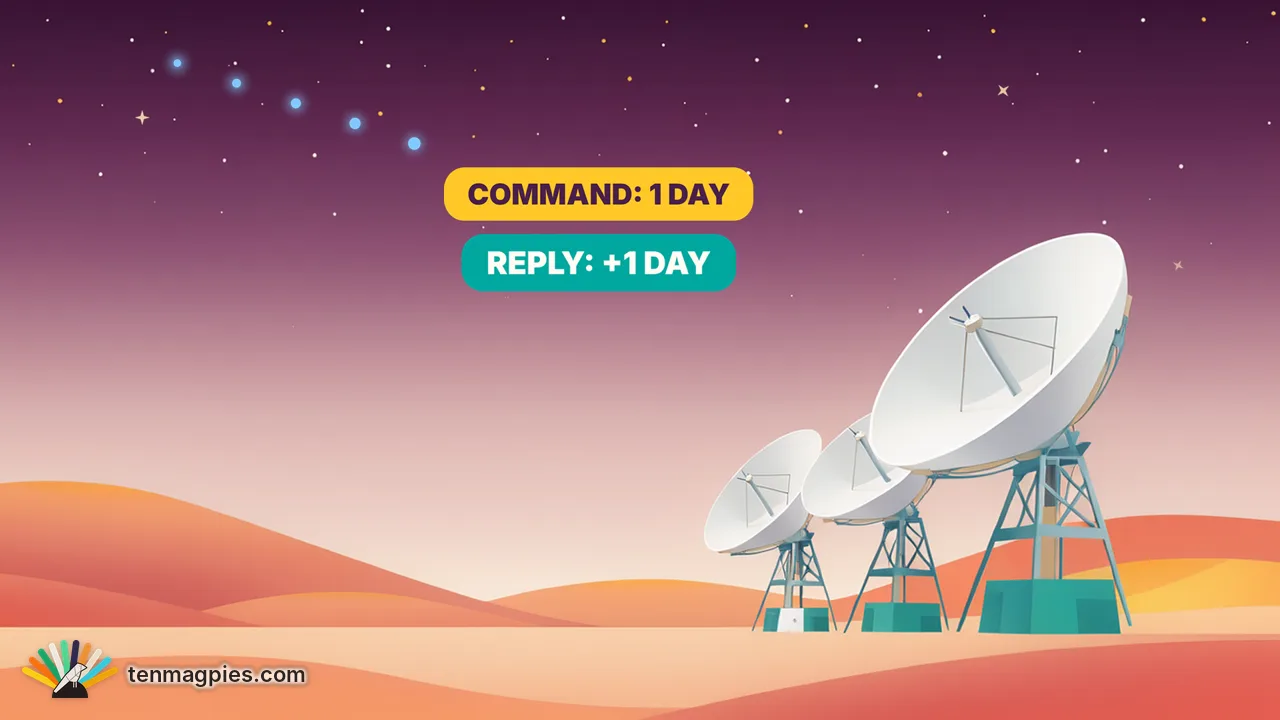
Say "hello" to Voyager 1 today, and it hears you tomorrow. Wait for the reply, and that's the day after.
The moment
This morning, Wednesday 18 November, at 5:16:07 a.m. EST, Voyager 1 crossed an invisible line nobody had ever reached. It is now one light-day from Earth. That's the distance light covers in 24 hours, about 16 billion miles, or 26 billion kilometres.
Light is the fastest thing there is. It goes around the Earth more than seven times in a single second. And it still needs a full day to catch up with this little probe.
"The Earth and Voyager are exactly 24 hours apart at the speed of light," said Linda Spilker, Voyager's project scientist at NASA's Jet Propulsion Laboratory. When the team sends a command, Voyager gets it 24 hours later, and "two days later, you receive confirmation."
Imagine texting your friend and seeing the blue ticks two days later. Now imagine your friend is the most distant thing humans have ever built.
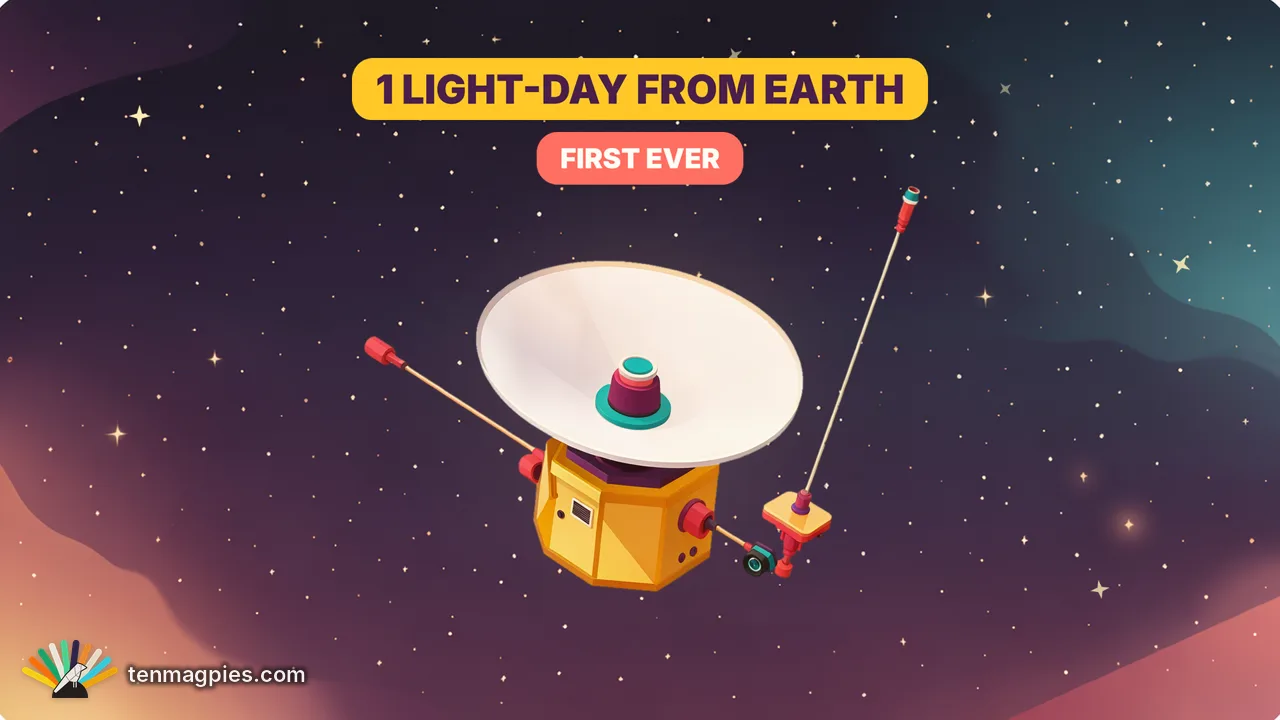
A 1977 kid that never came home
Voyager 1 left Florida on 5 September 1977, a couple of weeks after its twin, Voyager 2. Jimmy Carter was president. Star Wars had been in cinemas for three months.
The plan was a quick tour of Jupiter and Saturn. The probe did that, then kept going. In February 1990, it turned around one last time and photographed Earth from about 3.7 billion miles away: the famous "Pale Blue Dot", our whole planet as a speck in a sunbeam.
On 25 August 2012, Voyager 1 left the heliosphere, the giant bubble the Sun blows around itself. It became the first human-made object in interstellar space. Today it still flies at nearly 38,000 mph.
Still talking, on a tiny budget
Voyager runs on nuclear batteries that get weaker every year. To save power, NASA has turned off most of the instruments, including one in April this year. The team's promise is simple: keep at least one instrument working on each spacecraft.
Its whispers are caught by the Deep Space Network, giant radio dishes in California, Spain and Australia. The signal that arrives is fainter than you can imagine, and still the engineers keep the conversation going. Patience is the main job requirement. So is a good sense of humour about waiting.
A flashlight party for a spacecraft
NASA turned the milestone into a party. Last night, people around the world were invited to flash "VGR" in Morse code with phones, flashlights and even whole buildings. Voyager can't see it, of course. It's a thank-you note, not a phone call.
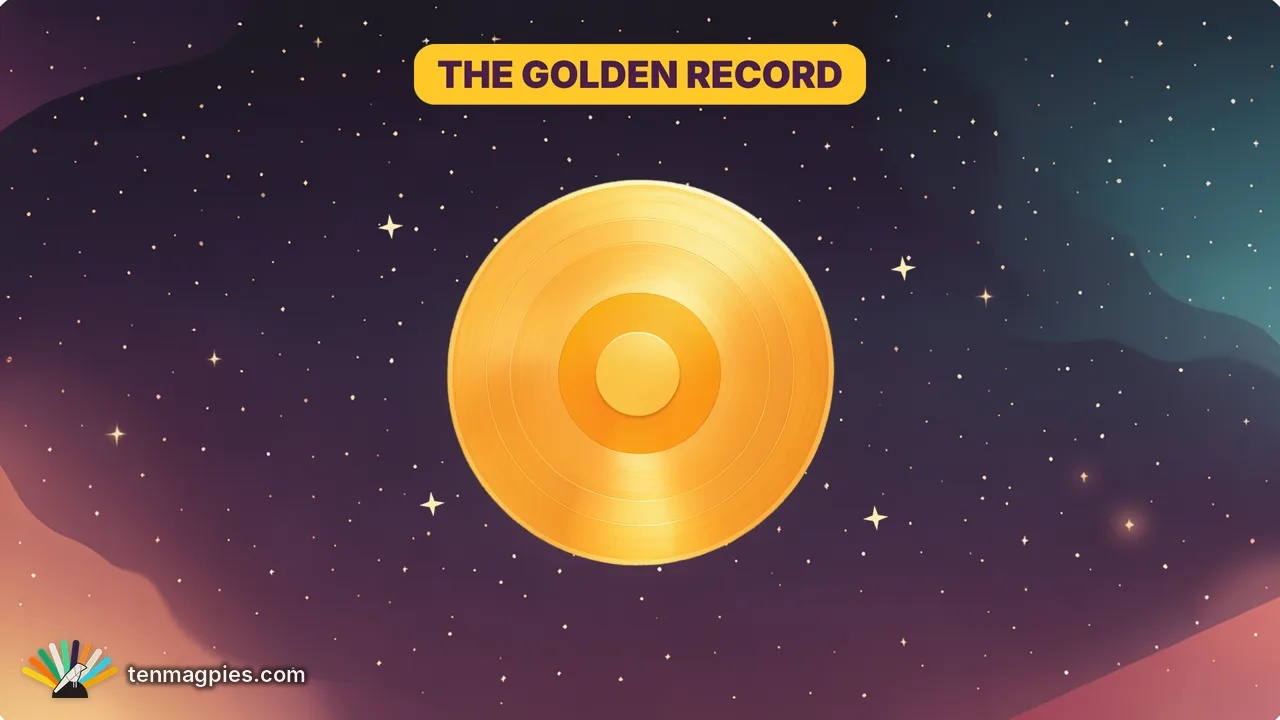
On board there is also a message for anyone who finds it: the Golden Record, with sounds and pictures of life on Earth. Carl Sagan called it a "bottle" thrown into the cosmic "ocean".
What's next
Next September, Voyager 1 turns 50. Its twin, Voyager 2, is about 2 billion miles behind, heading the other way out of the solar system, and should reach its own light-day in November 2035. And Spilker isn't saying goodbye: "The next milestone, and then we'll just keep on going."
Not bad for something older than most of the people reading this.