

Coffee is the one thing many of us buy every single day. So when it goes up, you feel it. This month, three different reports looked at what a cup costs. Let's do the maths together.
Italy: still cheap, but climbing
In Italy, an espresso at the bar costs more than €1 in all 19 cities checked by the government's price observatory in June 2026. The priciest is Bolzano at €1.51. The cheapest is Catanzaro, in the south, at €1.08. Rome is surprisingly mid-table at €1.19. According to Istat data prepared by the consumer group Altroconsumo, coffee prices for consumers rose 44% between 2021 and 2025.
Britain: a cappuccino habit costs over £1,000
In the UK, the average regular cappuccino is £3.53, using crowdsourced price data from Numbeo and Expatistan. London tops the list at £4.55 a cup, about £1,660 a year if you have one daily. Carlisle is cheapest at £2.62.
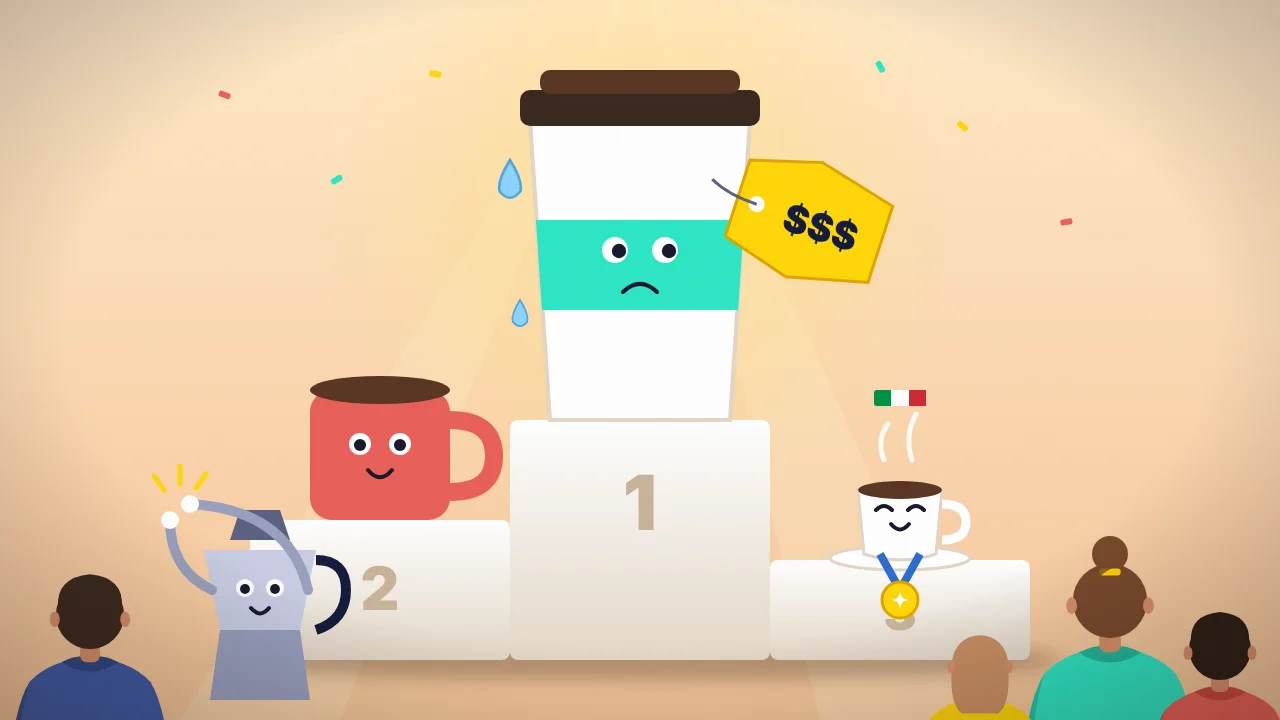
Australia: the $2,000 habit
Australians pay an average of A$5.42 for a takeaway coffee, says Compare the Market, and more than A$6 is common in big cities. One daily cup “could cost almost $2000 a year”. Another report, from Hey You and Westpac, puts the average lower, at A$4.69.
So why the big jump?
Partly the beans. Raw coffee prices roughly doubled on world markets, blamed on bad weather and smaller harvests in Brazil and Vietnam, plus speculation. Australian reports also point to extreme heat and changing rain in coffee-growing countries.
But here's the twist: an espresso uses only about 7 grams of coffee. Most of what you pay is the café's rent, staff, energy and machines. That's why the same coffee costs three times more in London than in Catanzaro.
Cheapest tip of all? The moka pot at home. It never asks for a tip.