
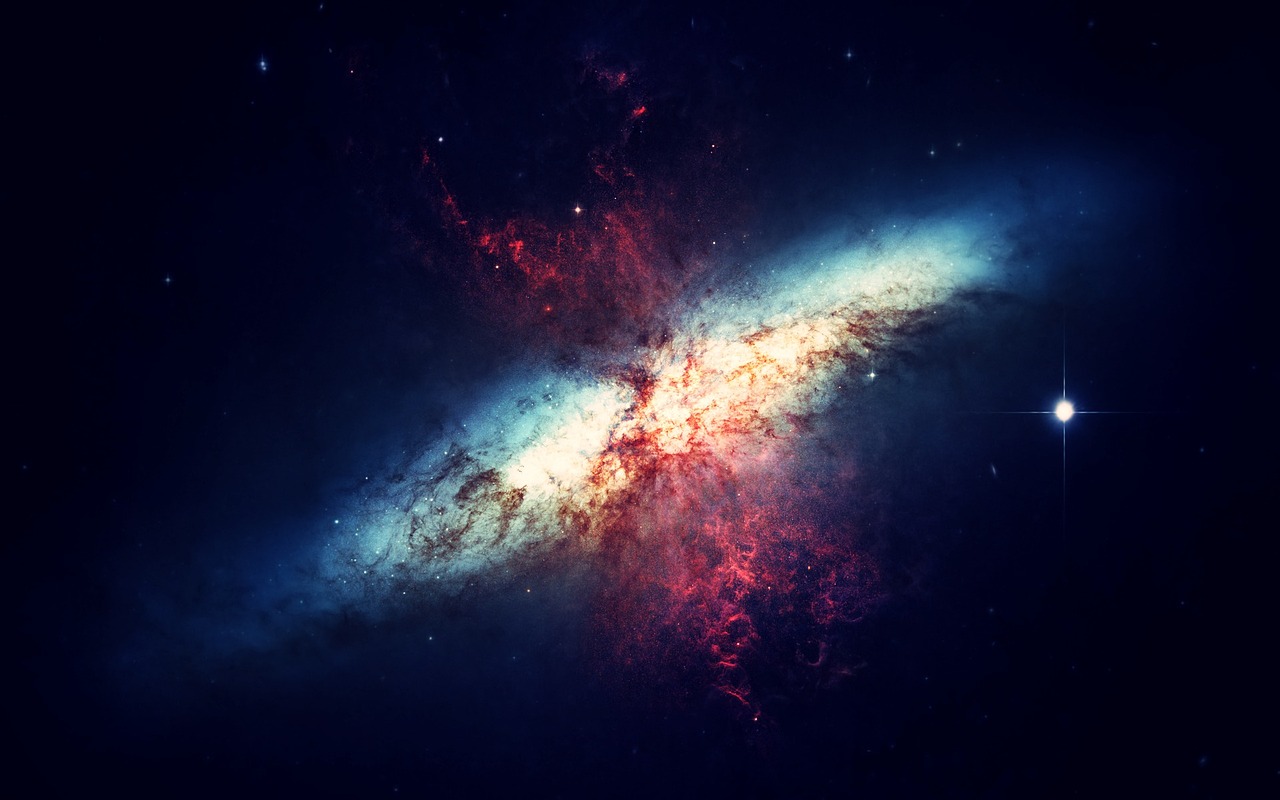
Astronomers have discovered the oldest known pair of quasars in the early universe, a finding that’s shaking up our understanding of how the cosmos got its start. These quasars, powered by giant black holes, are so ancient that they existed when the universe was just 670 million years old — less than 5% of its current age.
A Cosmic Head-Scratcher
The discovery was made using the James Webb Space Telescope, which peered back in time to see these distant objects. The quasars are so far away that their light has been traveling for over 13 billion years to reach us. That means we’re seeing them as they were when the universe was still in its infancy.
Black Holes on Overdrive
Quasars are powered by supermassive black holes, which devour gas and dust at the centers of galaxies. As the material spirals into the black hole, it heats up and shines brightly — like a cosmic lighthouse. But finding two of them so early in the universe’s history is a puzzle. Current theories suggest it should take much longer for black holes to grow large enough to power quasars.
A Challenge to Theory
The discovery challenges current theories about the early universe and the formation of massive structures like quasars and black holes. Scientists are now wondering: how did these black holes form so quickly? What kind of galaxies were they in? And what does this mean for our understanding of the universe’s evolution?
The James Webb’s Big Breakthrough
The James Webb Space Telescope has been a game-changer in this field. Its ability to detect light from the earliest galaxies has opened up new possibilities for studying the universe’s infancy. This discovery is just one of many that are helping astronomers piece together the story of how the cosmos came to be.
What Does This Mean for Us?
This discovery is more than just a scientific curiosity. It helps us understand the conditions of the early universe and how structures like galaxies and black holes formed. It also shows how much we still have to learn about the cosmos. And who knows — maybe one day, we’ll find even older quasars, or even other strange cosmic phenomena that challenge our understanding of the universe.