

Astronomers have found the oldest known compact quasar pair, named Nāpōwawāʻenakaulua. It’s a cosmic odd couple that shouldn’t exist so early in the universe’s history, and it’s throwing scientists off their usual tracks.
A Black Hole Love Story?
The quasar pair was discovered in the early universe, just 900 million years after the Big Bang. That’s like finding a fully grown adult in a toddler’s body. These quasars are powered by black holes, and their existence so soon after the Big Bang challenges current models of how black holes form and grow.
A Puzzle for Scientists
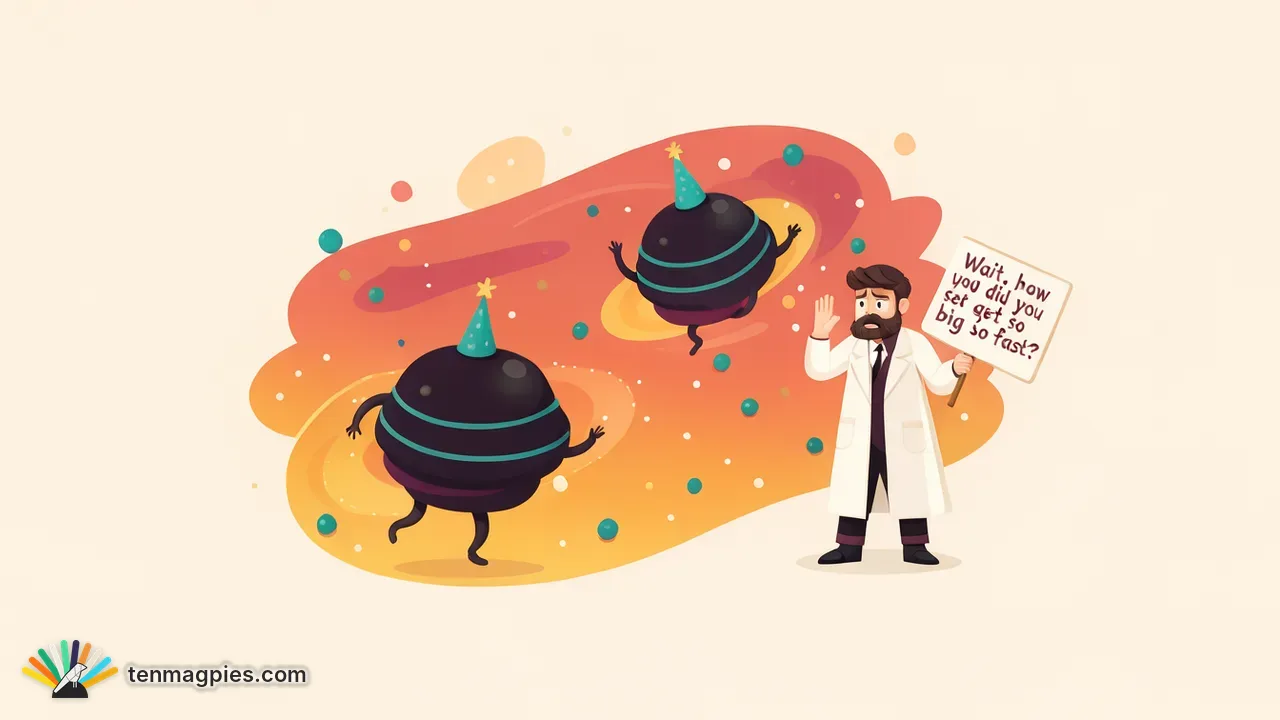
Phys.org researchers say this discovery poses a black hole growth puzzle. Current models may need a serious revision to explain how these massive objects could form so quickly. It’s like finding a skyscraper built in a day—something just doesn’t add up.
What’s Next?
The discovery of Nāpōwawāʻenakaulua has opened a new chapter in astronomy. Scientists are now racing to understand how these quasars—and their black holes—could have formed so early in the universe’s history. It’s a cosmic mystery that’s only just beginning to unfold.