

Quick question: do you know which apps are on your child's phone? Don't worry, nobody does. But here's a number worth knowing. In data from Findmykids, a parental-control app, 56% of US kids aged 9 to 17 had at least one AI app in September 2026. A year earlier it was 42%.
The surprise is the little ones. Among 9- and 10-year-olds, it jumped from 37% to 53%, even though ChatGPT isn't meant for under-13s. (Fair warning: these are the company's own users, and it sells monitoring apps, so take it as a snapshot, not the whole country.)
Homework helper or new best friend?
Not all AI apps are the same. A normal chatbot, the “ask it a question” kind, gets about 18 minutes a day. An AI companion, a character with a name, a personality and a memory, gets about 93 minutes. At weekends, 103. That's longer than most of us spend talking to our own mothers.
And when Character.AI stopped open chats for under-18s, lots of kids simply moved to other companion apps.
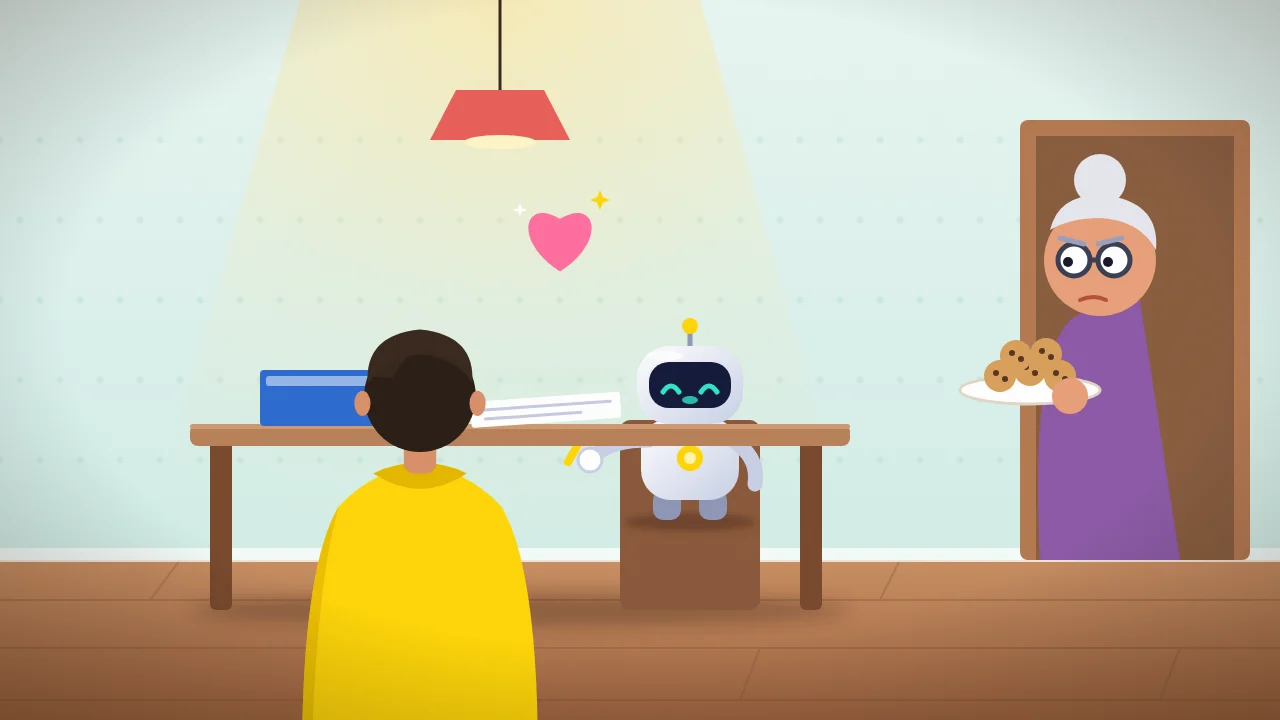
Why talk to a bot?
Psychologist Amy Dawel from the Australian National University says many kids use AI for personal stuff: advice, feelings, or just hanging out. A bot is there at 2am, never gets tired and always agrees with you. That's the catch. Real friends sometimes say no, and that's how kids learn how friendship works. Bots can also be confidently wrong.
It's not just an American thing. UNICEF asked teens and parents in 10 countries: on average 38% of kids had used AI, but only 12% of parents had.
Your five minutes tonight
Dawel's advice is to get curious, not strict. Ask your child to show you their favourite AI app. Write a silly story together with them as the hero. Or play “catch the AI out”: a point every time it gets a fact wrong. And keep being the person they come to first. Listen before you advise.
Bonus: you'll finally have someone to explain the app to you.