
In 2022, NASA crashed a spacecraft into an asteroid on purpose. Now Europe has sent the detective.
The crime scene
On 26 September 2022, NASA's DART probe slammed into Dimorphos, a 151-metre moonlet circling a bigger asteroid called Didymos (about 780 metres across). It worked better than planned: Dimorphos's orbit got about 33 minutes shorter. It was the first real test of pushing an asteroid off course, the kind of trick we'd need if one ever headed for Earth.
But nobody saw the aftermath up close. That's Hera's job.
Hera is there
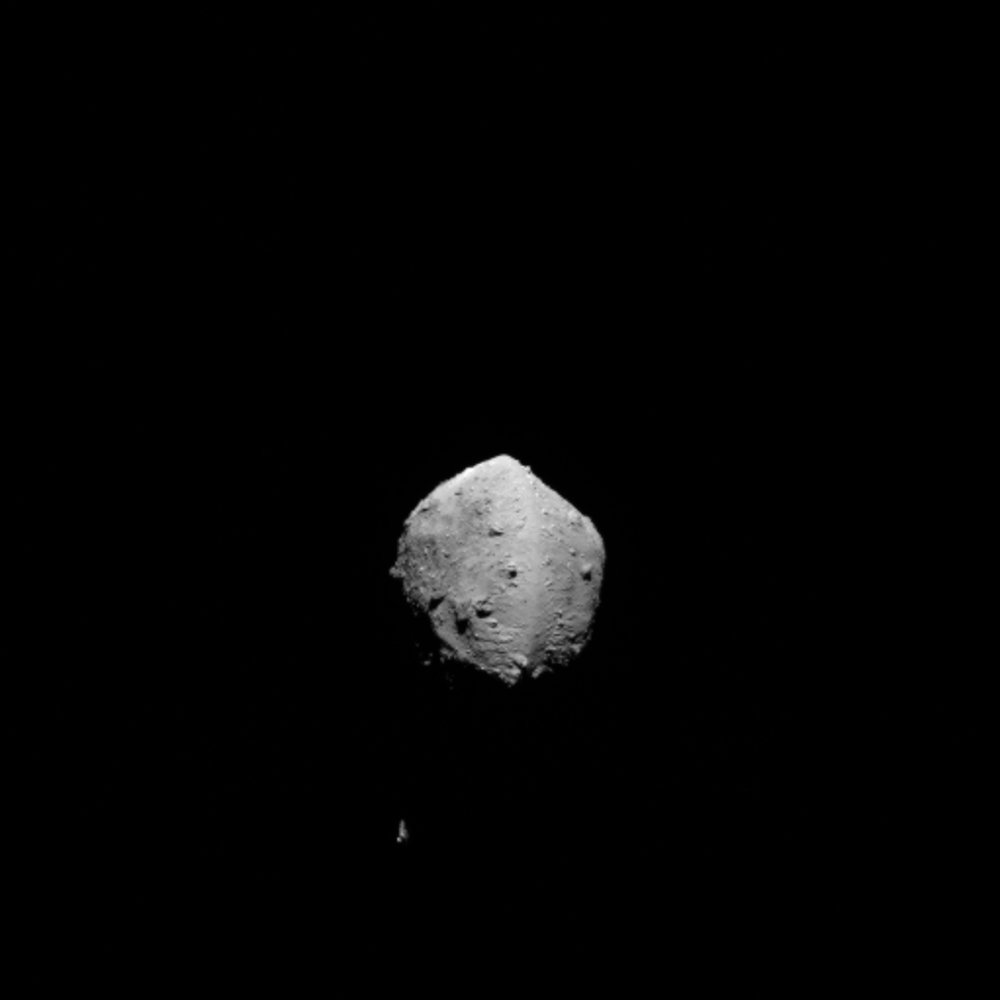
The European Space Agency's Hera, launched in October 2024, has now reached the pair, about 196 million km from Earth. Its first close-up came on 5 November from 60 km away, and it showed a face of Didymos that DART's camera never saw: boulders, craters and strange grooves.
"The first thing we said was wow!" said Patrick Michel, the mission's lead scientist.
Right now Hera is circling at 25 to 30 km in a funny pattern of "rectangles", nudging its thrusters every few days because the asteroids' gravity is so weak. Dimorphos pulls about 200,000 times weaker than Earth. You could jump off it.
The big questions
Did DART leave a crater, or did it reshape the whole moonlet? Is Dimorphos a loose pile of rubble or solid inside? Hera will map the impact zone in detail, and two tiny CubeSats, Milani and Juventas, will join in. Juventas carries a radar to look inside an asteroid for the first time.
"Hera will reveal which forecast was the correct one, if any!" said mission scientist Michael Kueppers.
What's next
ESA says detailed images of both asteroids come on 25 November, and closer passes start in December. The goal is simple: turn one lucky punch into a planetary defence move we can repeat. Nice to know someone is checking the bruises.