

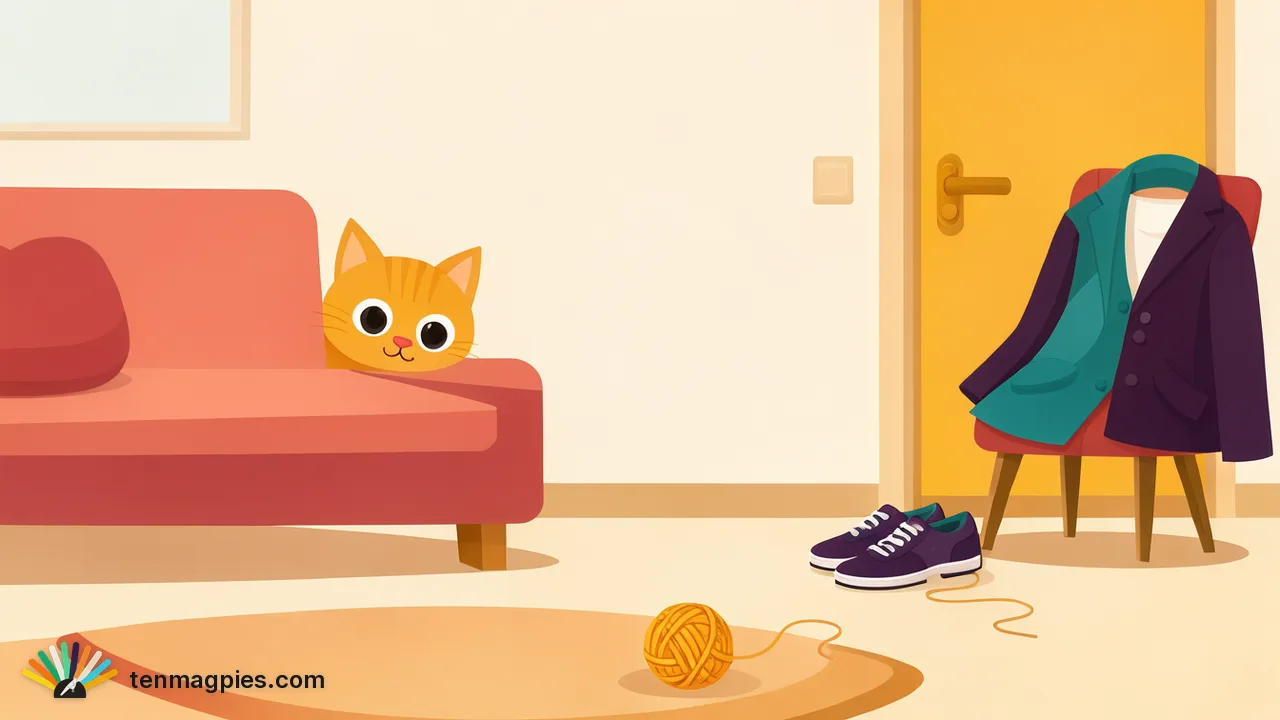
A guest walks in. One cat jumps on their lap. Another vanishes under the bed for three hours. And a third one hides behind the sofa, but keeps peeking out. That third cat, scientists say, might be the most interesting of all.
The baby test
Madoka Hattori, a cat researcher at Kyoto University, noticed something during earlier experiments: some cats acted around strangers a lot like human babies. Around nine months old, babies get wary of new people, but they're also curious and keep looking.
So her team took a questionnaire used to measure personality in human infants and adapted it for cats. Then 310 cat owners scored their pets on shyness, fear and how likely they were to approach new people or new toys.
Four kinds of cat
The cats fell into four groups: very sociable, sociable, fearful, and shy. The “shy” ones are the special case. They're scared, but they still come closer to check things out. That mix is exactly what shyness looks like in babies.
Who's most likely to be the shy type? Male cats, and cats that were born as strays.
For most cats, though, shyness and fear go hand in hand. “Shyness in cats is more complex than simply being afraid of humans,” the authors wrote.
What it means for your cat
A shy cat isn't a broken cat. It may just need time, and a guest who sits still and lets it come over. The researchers hope this kind of work can help shelters match cats with the right homes.
Next, Hattori wants to watch cats at home, not in the lab, because a visiting scientist is, let's face it, exactly the kind of stranger a cat would hide from.